How to Get Better at Gaming (Science-Backed Methods That Actually Work)
por Sidney Barbosa, em
Tweet
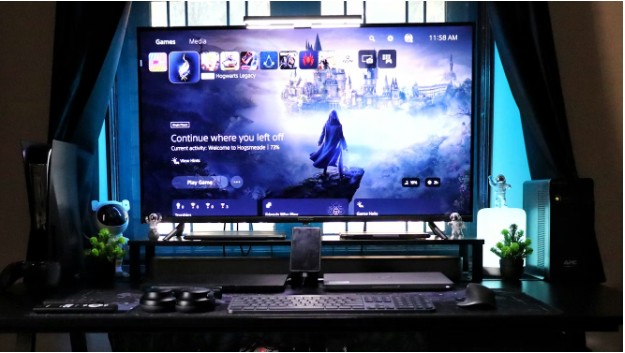
Getting better at gaming isn't about talent. It's about how your brain processes information when you're playing. Scientists at the University of Rochester ran studies on FPS players and found something interesting. Top performers process visual information differently than average players. Their brains work more efficiently—like a surgeon's or an athlete's. The thing is, most people don't know this. They grind hundreds of hours without understanding what's actually happening in their heads. They plateau. Get frustrated. Blame the game. But the research shows a different story. When you play action games, your brain increases beta waves for faster processing and alpha waves in the prefrontal cortex for concentration. Kids who played three hours daily showed higher brain activity in attention and memory regions. Their impulse control improved. Their working memory got sharper. This isn't about playing more. It's about playing smarter.
Your reaction time, hand-eye coordination, and decision-making all stem from neurological changes. Video games don't just entertain—they rewire how you process information. CU Boulder studied 1,241 adults and found that action games significantly improved spatial reasoning, even after adjusting for IQ. Puzzle games boosted processing speed. Different genres train different cognitive skills. FPS games enhance: Visual tracking, reaction time, hand-eye coordination MOBAs develop: Decision-making under pressure, multitasking, strategic thinking Strategy games build: Working memory, problem-solving, pattern recognition The catch? Casual play doesn't cut it. When researchers examined video game players versus non-players, they found VGPs (video game players) were faster and more accurate in sensorimotor decision-making tasks. But only because the games forced them to make timed decisions under pressure. That pressure matters more than you think.
A UNLV study on skill acquisition revealed something critical. People who practiced under pressure improved faster than those who didn't. The research used AI to personalize challenges and add rewards, accelerating skill retention. This translates directly to gaming. Running aim trainers without pressure doesn't create the same neurological adaptations as ranked matches. Your brain learns differently when stakes are involved. That's why pros scrim at tournament-level intensity instead of grinding casual lobbies. The machine learning approach used in the study mirrors how modern games work. They throw you into situations that demand quick sensorimotor decisions, forcing your brain to adapt through repetition. But there's a gap between casual and deliberate practice that most players ignore.
When you boot up Battlelog or any competitive game, ask yourself: are you practicing or just playing? Playing means going through the motions. Training means identifying weaknesses and drilling them under conditions that mimic real pressure. Pro players understand this. They don't just queue matches. They analyze VODs, identify decision-making errors, and run specific drills to address them. The ESA's 2025 Power of Play report found that 43% of gamers credited games with improving their career and education—because they approached gaming like a skill to develop.
Each game genre demands different cognitive skills. The 2025 CU Boulder study confirmed that Action+ games (FPS, MOBAs) excel at building spatial reasoning, while Puzzle+ games enhance processing speed.
First-person shooters require tracking fast-moving objects while making split-second decisions. Your visual cortex becomes more efficient over time—research shows experienced players use less brain activity in visual processing regions because their brains work more efficiently. Tracking aim, flicking to targets, and recoil control all stem from this visual-motor connection. The more you train these specific movements under pressure, the more ingrained they become.
Games like League of Legends or Dota 2 train multitasking and decision flexibility. You're processing team positions, cooldowns, resource management, and macro strategy simultaneously. The NIH's ABCD study tracking children into adulthood found that players developed superior working memory and impulse control—exactly what MOBAs demand. You're constantly weighing risks, predicting outcomes, and adapting strategies mid-match.
Gaming boosts mental well-being by 0.60 standard deviations, according to a 2024 study on Nintendo Switch ownership. That resilience matters when you're down 0-3 in a match. Tilt management comes from impulse control gains. Kids who played three hours daily showed better impulse control than those who never played. They could regulate emotional responses better. Confidence ties directly to decision-making accuracy. When researchers used fMRI to study video game players, they found enhanced activity in brain regions responsible for attention and memory during demanding tasks. Players who trusted their instincts performed better. Growth mindset matters too. The cognitive training from games teaches your brain that improvement comes from effort, not innate talent.
The NIH's longitudinal study is tracking sleep, exercise, and mental health alongside gaming habits. Early results suggest balance matters. You need intense practice sessions to trigger neurological adaptations, but overdoing it without recovery leads to diminishing returns. Your brain needs time to consolidate new patterns. Sessions should balance cognitive demand with fatigue prevention. When your performance drops, continuing just ingrains bad habits.
AI and machine learning now personalize training challenges based on your skill gaps. The Evenplay simulator study showed that adaptive difficulty with rewards improved retention significantly. This applies to gaming. Modern tools analyze your gameplay, identify weaknesses, and suggest specific drills. EEG and fMRI research tracks brain changes post-play, confirming that targeted practice creates measurable cognitive improvements. Replay analysis reveals decision-making patterns. Watching your own gameplay with a critical eye—looking for positioning errors, timing mistakes, and missed opportunities—accelerates improvement faster than mindless grinding. The community views legitimate training tools positively because they enhance decision-making without crossing into cheating territory. Tools that help you analyze and improve are different from those that play for you.
Plateaus happen when you practice without sufficient pressure or deliberate focus. Your brain adapts quickly initially—those beta and alpha wave changes happen early—but then efficiency plateaus without new challenges. The learning curve starts steep. Beginners see rapid cognitive boosts because everything is novel. Then progress slows. That's when most players give up or stay stuck. Breaking through requires intensity variation. If you're always playing at the same skill level, your brain stops adapting. You need to push into uncomfortable territory where you're forced to make faster decisions and execute more precisely.
Skills don't always transfer between games. The CU Boulder study found that Action+ games specifically improved spatial reasoning, while Puzzle+ games boosted processing speed. Playing different games builds different cognitive foundations. If you're stuck in one game, trying a different genre temporarily can create new neural pathways that indirectly improve your primary game.
Improvement doesn't come from hoping you'll magically get better. It comes from structured practice that targets specific weaknesses. Start with awareness. What actually costs you rounds? Is it aim? Decision-making? Positioning? Game knowledge? Then create deliberate drills. If your tracking is weak, run tracking scenarios under time pressure. If your positioning gets you killed, study VODs of better players and implement one positioning rule per session. The research is clear: games train your brain when used correctly. The neurological adaptations are real. The cognitive benefits transfer to reaction time, working memory, and decision-making. But only if you approach improvement deliberately. Only if you practice under pressure. Only if you analyze what's actually holding you back instead of just playing more. Getting better at gaming isn't mysterious. It's a combination of understanding how your brain learns, applying deliberate practice principles, and staying consistent with targeted training. The science proves it works. The question is whether you'll actually do it.